On the 29th July 2023 attended initial on-line meeting with Dr Alain Siri, Executive Secretary of the National Development Program, Bernabé Kambou, coordinator Burkina Faso development and Dr. Jonathan Mapwata
To prepare for the meeting I was provided the Burkina Faso Government’s Action Plan for Stabilisation and Development – to read the action plan in original French please click here – as well as undertook my own in-depth research available on request) as well as had discussions with the World Bank with regard to the INTERNATIONAL DEVELOPMENT ASSOCIATION, INTERNATIONAL FINANCE CORPORATION, MULTILATERAL INVESTMENT GUARANTEE AGENCY, COUNTRY PARTNERSHIP FRAMEWORK, FOR BURKINA FASO, FOR THE PERIOD FY18-FY23, which the World Bank provided.
Translated text to English of the Burkina Faso Government’s Action Plan for Stabilisation and Development
INTRODUCTION
For more than six (06) years, Burkina Faso has been facing a security crisis particularly trying, which has had humanitarian, social and economic repercussions unprecedented. This situation was superimposed on a crisis of governance which led to institutional changes in the management of state power, on January 24, 2022 and the September 30, 2022, respectively.
For the conduct of public action, the authorities wished to unite the energies of all Burkinabè in order to lay the foundations of a new Burkina Faso. This will resulted in the development of draft constitutional charters, charters of values and a Transition Agenda which have been enriched and adopted by the living forces of the Nation gathered in national meetings on February 28 and March 1, 2022. Following the rectification of the Transition that took place on September 30, 2022, a new charter Constitution of the Transition was adopted by the living forces of the nation, united in national meetings on October 14, 2022. The charter of October 14 assigns to the Transition, six main missions, namely:
(i) restore and strengthen security throughout the territory national ;
(ii) provide an urgent, effective and efficient response to the crisis humanitarian;
(iii) promote good governance and fight against corruption;
(iv) initiate political, administrative and institutional reforms with a view to strengthen democratic culture and consolidate the rule of law;
(v) work towards national reconciliation and social cohesion and (vi), ensure the organisation free, transparent and inclusive elections.
The priority actions to be carried out to carry out the missions of the Transition are distributed in four (04) pillars, namely:
(i) fight against terrorism and restore integrity territorial;
(ii) respond to the humanitarian crisis;
(iii) rebuild the state and improve the governance and
(iv) work for national reconciliation and social cohesion.
In order to implement these priorities, the Prime Minister, Head of Government, Chairman of the National Steering Committee for the National Development Policy, 2021-2025 required the update of the Action Plan for Stabilisation and Development (PASD).
The Stabilisation and Development Action Plan is the central instrument operationalisation of the National Development Policy during the period of the Transition. Drafting and updating the Stabilisation and Development Action Plan (PA-SD) e were carried out in a participatory and iterative manner with the involvement of all ministerial departments.
This PA-SD document is structured around the following three points:
(i) Pillars, priorities and priority actions;
(ii) Overall cost; and
(iii) Provisions for implementation and monitoring and evaluation.
I. Pillars, axes and priority actions
The PA-SD is structured around four fundamental pillars, under which are found the axes and strategic objectives of the National Development Policy, the PNDES-II.
PILLAR 1: Fight against terrorism and restore territorial integrity The terrorist attacks suffered by Burkina Faso for more than 7 years have caused the destruction of many villages, with the displacement of tens of thousands of people internally displaced. Also, thousands of public services including schools and health centres have been closed. These terrorist attacks have deconstructed the State whose agents were forced to abandon their posts to escape threats. Therefore, the Restoring the integrity of the territory is a priority for the Transition.
This is why Pillar 1 of the Stabilisation and Development Action Plan has set as an objective for public action, to liberate the areas occupied by terrorist groups and to create the security conditions necessary for the return of the State and the populations to these areas.
Through this pillar, it will be concretely a question of generating, among other things, the effects of policy following:
• increase the coverage rate of the territory in operational security services by 69% in 2020 to 77% in 2025
• reduce the overall insecurity index from 1.1 in 2021 to less than 1 in 2025 and the global terrorism index from 6.8 in 2019 to 2 in 2023;
• increase the proportion of local authorities whose essential public services are functional from 40% in 2020 to at least 50% in 2025.
Achieving these results requires the implementation of reforms and programs including:
− the operationalisation of guidelines for policies and strategies in terms of security and defence (PSN, SSN, SNLCT) through the appropriate equipment of the FDS to deal with the terrorist threat; construction of new infrastructure security, recruitment and training of security personnel;
− the reinstallation of State services in localities freed from the influence of Armed Terrorist Groups, in particular the security services, the headquarters of administrative districts and local authorities (high commissions, prefectures, town halls);
− improving the management of the collection and use of information by relation to terrorist activities as well as the surveillance capacity territory electronics;
− the drying up of sources of supply for Armed Terrorist Groups in resources of all kinds with reinforced monitoring of informal circuits of marketing of motorcycles, petroleum products and informal transfer networks silver.
It will also be a question, through this pillar, of implementing the National Strategy for Preventing Radicalisation and Countering Violent Extremism. Implementation of this strategy involves, in particular, actions to raise awareness and train employees young people to civic-mindedness, to the culture of peace, to living together as well as through improving citizen participation in the fight against terrorism.
PILLAR 2: Respond to the crisis humanitarian
Due to terrorist attacks, the number of Internally Displaced Persons (IDPs) has steadily increased. increase, so that as of December 31, 2022, Burkina Faso had 1,882,391 IDPs. Also, the spike in the prices of food and basic necessities that resulted from the crisis safety and the bad 2021-2022 agricultural campaign, requires the taking of adequate measures to maintain the standard of living of the people.
This is why the second pillar of the Stabilisation and Development Action Plan aims to ensure an urgent and effective response to the humanitarian crisis and the socio-economic dramas and communities caused by insecurity and climatic hazards.
Through this pillar, it will be a question of working to achieve, among others, the following policy effects:
• increase to 50% the proportion of IDPs voluntarily returned, integrated or resettled in 2025;
• increase to 75% in 2025, the proportion of closed health facilities put back into operation in the areas with high security challenges;
• increase to at least 75% per year, the rate of execution of the Response and support plan for populations vulnerable to food insecurity and malnutrition.
The results targeted by this pillar will be achieved through the implementation of several projects/programs of which :
− projects and programs to support the voluntary return of displaced persons to their areas original;
− stabilisation and resilience projects and programs;
− the continuity of basic care, education in emergency situations and nutrition services, for the benefit of IDPs and populations affected by terrorism;
− psycho-social care for victims and people affected by terrorism;
− the prevention and management of disasters and humanitarian crises;
− improving the living conditions of IDPs and people affected by terrorism.
PILLAR 3: Refound the State and improve governance
The 3rd pillar of the Action Plan for Stabilisation and Development concentrates the priorities of action to be taken in order to improve various areas of governance, to consolidate the dynamics of the development of human capital and to improve the production of the sectors carriers for the economy in order to respond effectively to the needs of the populations.
In terms of improving governance, the Action Plan for Stabilisation and development aims, among other things, to generate the following effects:
• improve the corruption perception index from 40 in 2020 to 45/100 in 2025;
• reduce the average processing time for flagrante delicto cases by 65 days by 2021 to 45 days in 2025;
• increase the share of the State budget transferred to local authorities from 15% in 2021 to 18% in 2025.
Achieving these results requires, in particular:
− the revision of the texts regulating the elections and the functioning of the parties policies;
− modernisation of public administration;
− strengthening the operational capacities of the courts;
− reform of the decentralisation financing mechanism;
− improving the mobilisation of tax resources.
In the field of social governance, in particular the development of capital and national solidarity, the actions of the Government aim, among other things, to:
• raise the annual growth rate of TVET staff to 9%;
• increase the number of contacts of children under 5 with health services more than 2.5 per year;
• improve the indicators of access and coverage to education, drinking water and energy;
• create at least 50,000 decent jobs per year.
To achieve these results, the actions to be implemented by area are, among others:
1. Health
− extension of the policy of free healthcare;
− the continuation of actions to combat covid-19;
− the implementation of health investments and reforms.
2. Education
− the construction of science high schools, TVET, lecture halls and buildings educational;
− the implementation of reforms in the education system and the continuation of the reduction classrooms under straw huts.
3. Employment and social protection
− the operationalisation of RAMU;
− the implementation of youth employability projects and programs and empowerment of women and girls;
− the implementation of entrepreneurship financing projects and programs for young people and women.
4. Water, sanitation, housing and energy
− construction of water supply structures, water reservoirs;
− construction of treated water treatment and storage structures;
− construction of sanitation works;
− the implementation of electrification projects;
− the realisation of development projects and the construction of social housing and economic.
In the area of economic governance, particularly in terms of improving the the productivity of the production and infrastructure development sectors of support, this involves, among other things, working to:
• increase the share of manufacturing industry in GDP to 12% in 2025;
• increase the proportion of developed feeder roads from 35.5% in 2021 to 42% in 2025 and that of paved roads from 28.1% in 2021 to 34.4% in 2025;
• increase the installed electrical power from 740 MW in 2021 to 1500 MW in 2025;
• improve the share of service industries in GDP.
To achieve these results, the following actions will be, among others, implemented by field of activity.
1. Agro-salvo-pastoral production
− the development of lowlands and irrigated areas (25,000 ha);
− the granting of inputs and equipment at subsidised prices to producers.
2. INDUSTRY AND MERCHANT SERVICES
− the development of the Samendéni agro-industrial zone;
− the revival of industrial infrastructure works;
− securing strategic investments.
3. Transport infrastructure
− construction and asphalting of roads and roads (1,500 km);
− construction of new rural roads (4,000 km);
− the continuation of the construction of the DONSIN airport.
4. Energy
− the continuation of construction work on solar power plants;
− strengthening the electricity transmission and distribution network.
PILLAR 4: Working towards national reconciliation and social cohesion
The recent political, security and humanitarian crises, sometimes marked by clashes between communities have affected the legendary social cohesion established in Burkina Faso. Many people have a negative perception of Justice and several other institutions of the Nation. This is why the 4th Pillar of the Action Plan for stabilisation and development, was dedicated to continuing the construction of the national reconciliation with the aim of mending the social fabric damaged by prejudice, grudges and accusations.
Through this pillar, it will be a question, among other things, of generating the following policy results:
• reduce the number of intra-religious conflicts from 18 in 2020 to 5 in 2025 and the number of inter-religious conflicts from 9 in 2020 to 2 in 2025;
• increase the overall rate of satisfaction of the population vis-à-vis the justice system to 52.1% in 2019 to 57% in 2025;
• increase to 100% the proportion of political parties and associations followed by public administration.
Achieving these results requires, in particular, the implementation of the actions below:
− the adoption of a new law on religious freedom and its implementing texts;
− speeding up the processing of cases pending in court;
− the strengthening of inter-religious and intercultural dialogue;
− the prevention and management of community and inter-community conflicts;
− continuation of the national reconciliation process;
− the systematisation of the repression of hate speech and the stigmatisation of communities.
The following are my notes with regard to the meeting.
BURKINA FASO MEETING SUMMARY Following discussions involving Dr Alain Siri, Executive Secretary of the National Development Program, Bernabé Kambou, coordinator for the Burkina Faso development and Dr Jonathan Mapwata on the 29th July 2023.
To prepare for the meeting I was provided with the Burkina Faso Government’s Action Plan for Stabilisation and Development, which highlighted four crucial policy pillars;
PILLAR 1: Fight against terrorism and restore territorial integrity
PILLAR 2: Respond to the humanitarian Crisis
PILLAR 3: Re-found the State and improve governance
PILLAR 4: Working towards national reconciliation and social cohesion
In preparing for the meeting I focused mainly on Priority 3, specifically the following sectors, mainly because these are S.Y. specialities, along with Technology and Healthcare, but also would be the elements that would bring most benefit and relief to the majority of population.
- Energy
- Water and sanitation
- Agriculture, specifically Agro-sylvo-pastoral systems as this was mentioned as preferred system.
- Infrastructure
- Industry and Manufacturing
During the hour plus conference call we discussed a number of subjects, each being incredibly important and all requiring resolving urgently.
I became concerned that by our discussing so many important and immensely critical areas that little would be achieved, with regard to prioritising where we should initially focus our (S.Y.) efforts, and as such asked which sector(s) do they think should be prioritised – the response was categoric, Energy and Food Security.
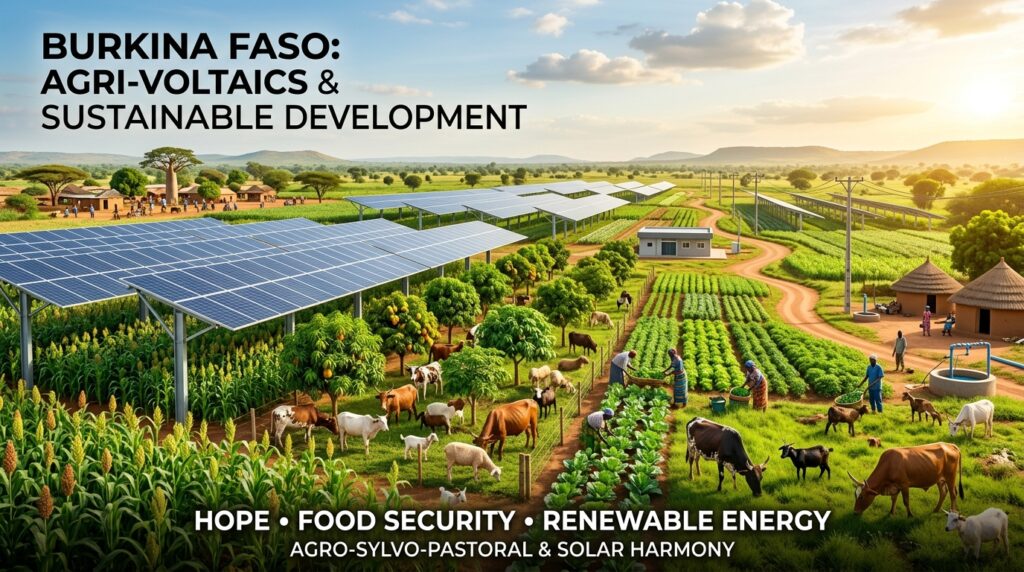
As such it was decided that Energy and Food Security would be the initial sector and a solution strategy document would be prepared within these crucial sectors, specifically focusing on Agro-Sylvo-Pastoral and Agri-voltaic type projects.
It should be noted that due to the current political climate it will be extremely difficult to raise private or institutional funding, by focusing on energy and food security, funding should be possible through regional as well as global economic funds.